
Menu
Close



Menu
Close

Web
Research, UI/UX, Design System
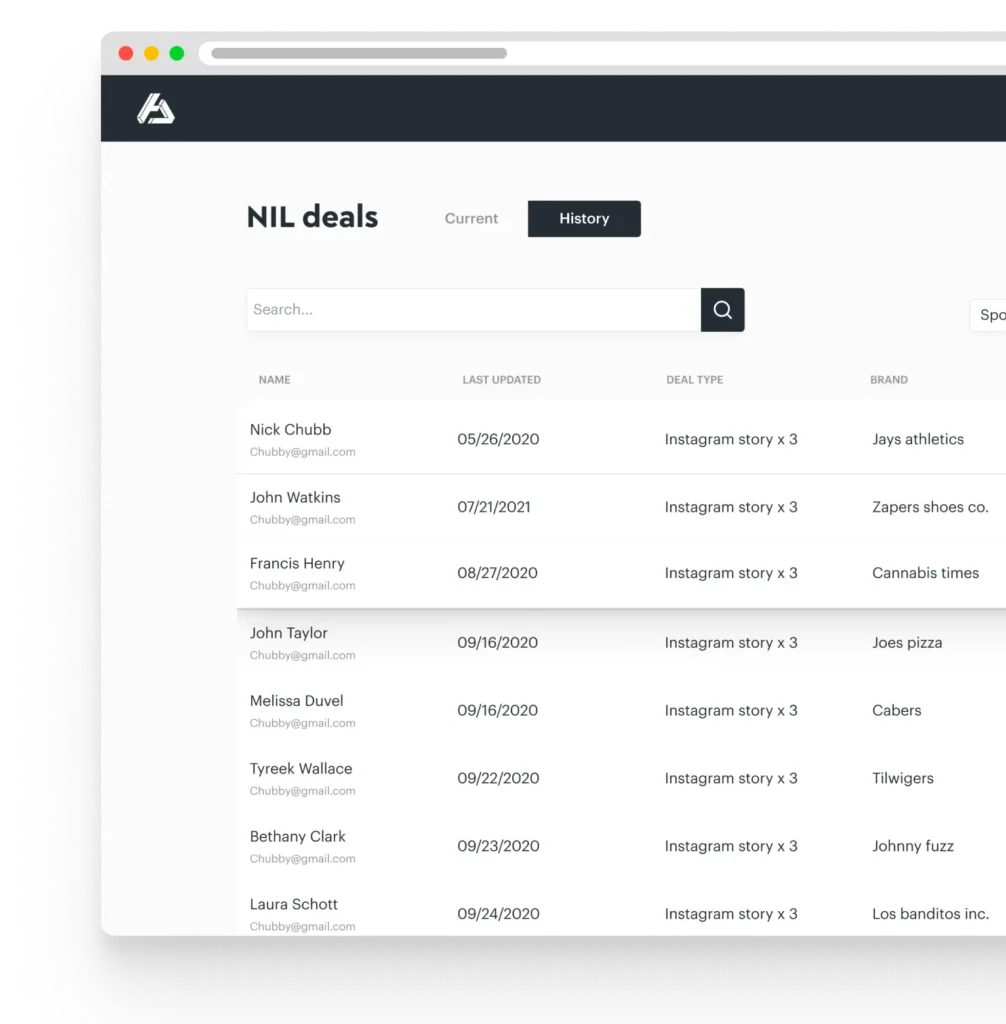
The NCAA rakes in over $1 billion each year—no small sum. Until recently, that revenue landed squarely in the hands of universities and merchandisers, thanks to sales of everything from jerseys to bobbleheads. But the introduction of NIL (Name, Image, Likeness) legislation changed the game. With NIL, college athletes can finally profit from their personal brand, opening doors for sponsorships, endorsements, and other commercial opportunities.
Yet, as with most sweeping policy changes, confusion followed. Brands hesitated, unsure how to navigate these uncharted waters. Student athletes, many still just kids, lacked negotiation skills and a firm grasp of the legal landscape. Meanwhile, colleges, feeling protective, struggled to guide athletes suddenly equipped with newfound influence. That’s where Athlete Ventures stepped in. As an online marketplace, Athlete Ventures cuts through the chaos, bringing clarity, safety, and structure to an uncertain landscape.
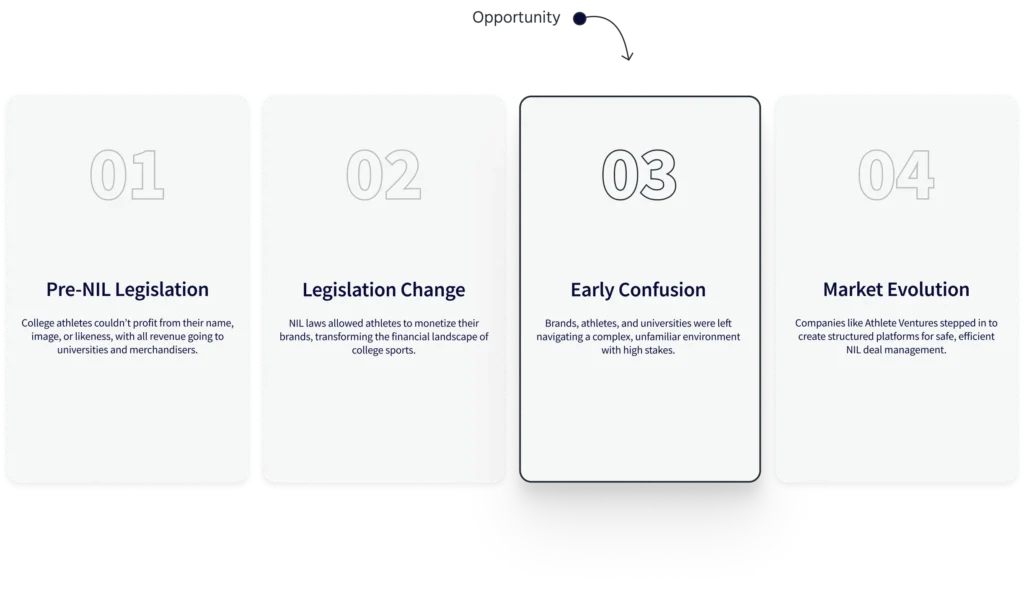
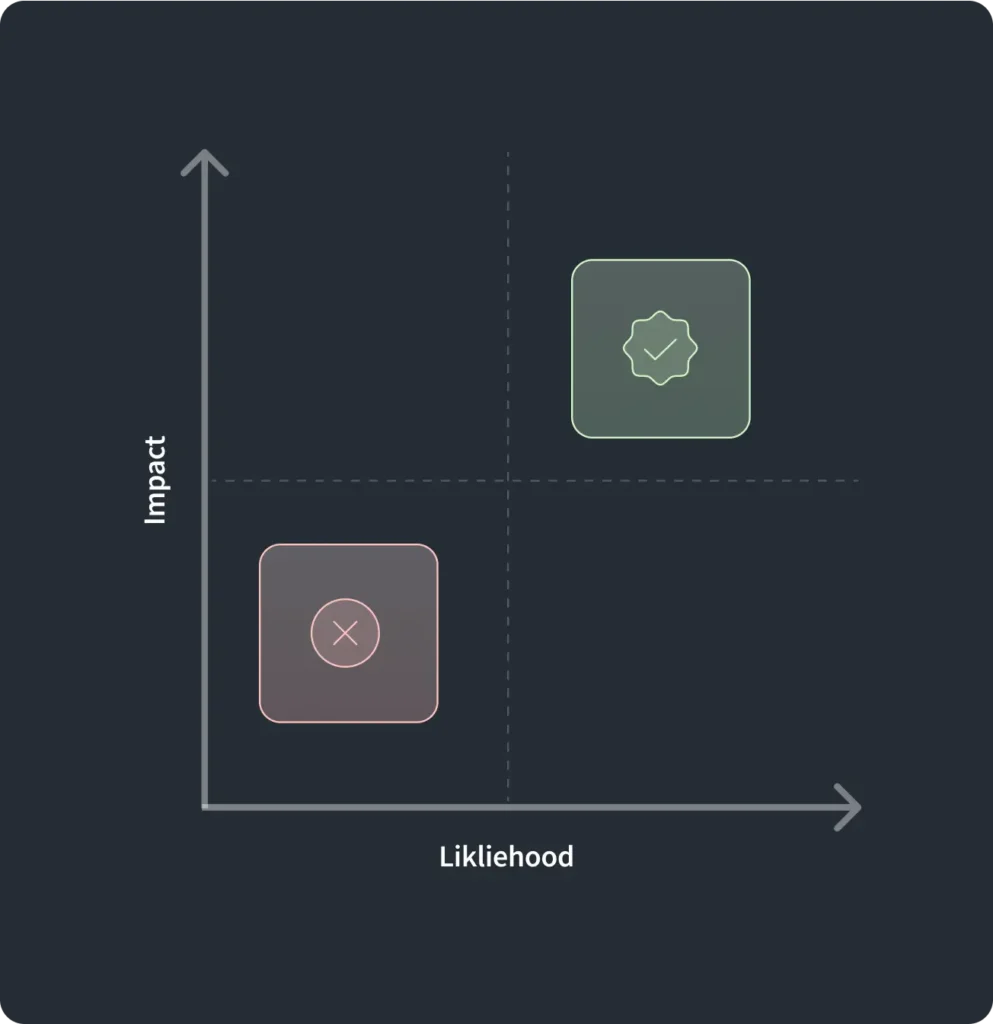
We realized early on that our product was built on a web of assumptions. The founders had identified an opportunity but lacked firsthand insight into key stakeholder challenges. To address this, we ran a “riskiest assumption workshop” during our initial strategy sprint, ranking assumptions based on their potential impact and likelihood.
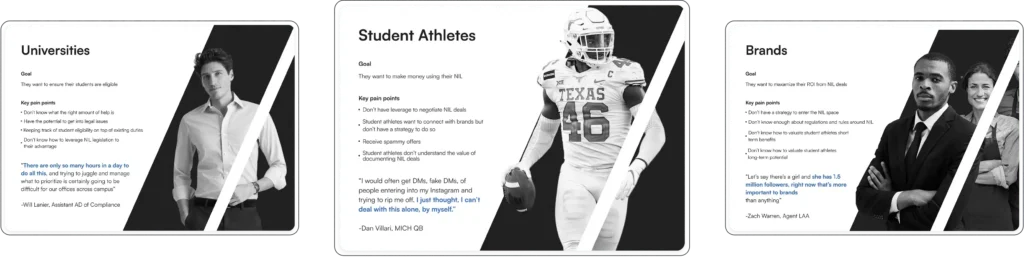
This exercise pinpointed critical uncertainties, like student athletes struggling to find brands, brands not knowing how to value athletes, and athletes often lacking agents. We validated these insights through interviews with student athletes, NCAA coaches, and brand reps from major sports companies.
Our research revealed surprising opportunities and confirmed critical assumptions. Universities emerged as a bigger target market than expected, primarily focused on preventing student athletes from making costly mistakes, like signing illegal contracts that could lead to suspension. They were willing to pay for solutions that protected their athletes from risky agreements tied to inappropriate endorsements or hidden legal pitfalls.
We found the space to be chaotic and unregulated, with much activity happening informally through Instagram DMs, where athletes were often targeted by spammy or exploitative offers. Local NIL deals added another layer of complexity. These agreements were often small, short-lived contracts with local businesses, offering little financial gain but now requiring proper documentation and taxation as income. While student athletes seemed less concerned, universities, parents, and coaches recognized the risks and how unprepared many athletes were to navigate this space safely.
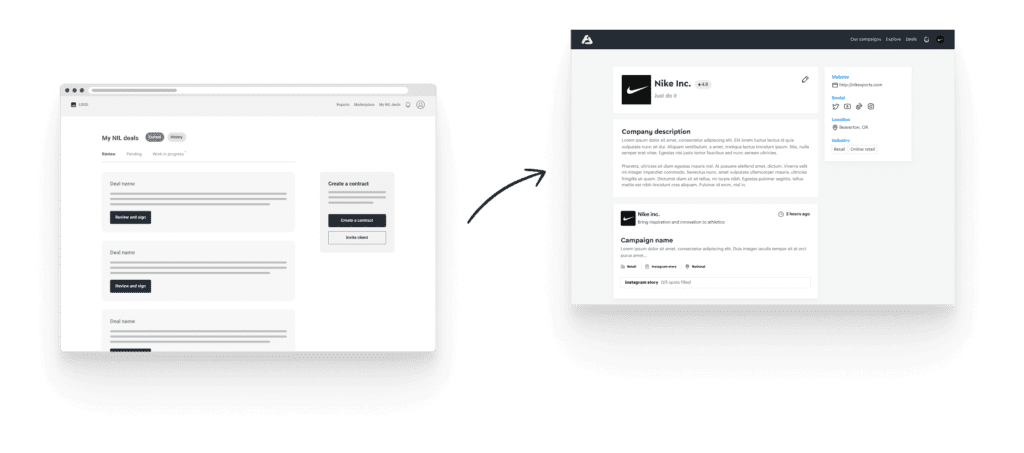
From there, we dove into design, beginning with user journeys and progressing to high-fidelity mockups. Collaborating closely with our client, we prioritized MVP features, separating must-haves from nice-to-haves. The focus skewed heavily toward building a marketplace that facilitated negotiating, tracking, and signing contracts, while features like reporting remained secondary.
Our business model targeted universities, ensuring their athletes stayed compliant. This approach allowed us to onboard student athletes through university partnerships, avoiding the classic supply-and-demand challenge of marketplace startups. Core features included deal creation and posting, contract signing and tracking, and dashboards for coaches, student athletes, and brands to manage their transactions seamlessly.
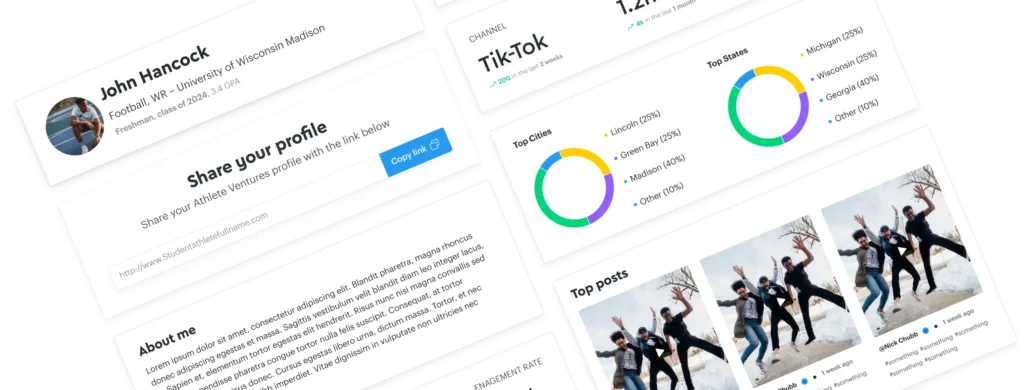
Brands are key to our marketplace’s success, so we designed features that directly address their needs. We added easy-to-share media kits, enabling brands to evaluate student athletes objectively. These kits provide details on past achievements, social media growth, and athletic momentum, which help brands assess an athlete’s long-term potential—not just their current follower count. Since athletic performance is often tied to social influence, these insights are crucial for brands looking to make informed investments. Additionally, we created a safe and compliant space for brands to post and negotiate deals, laying a foundation for future features like advanced reporting.
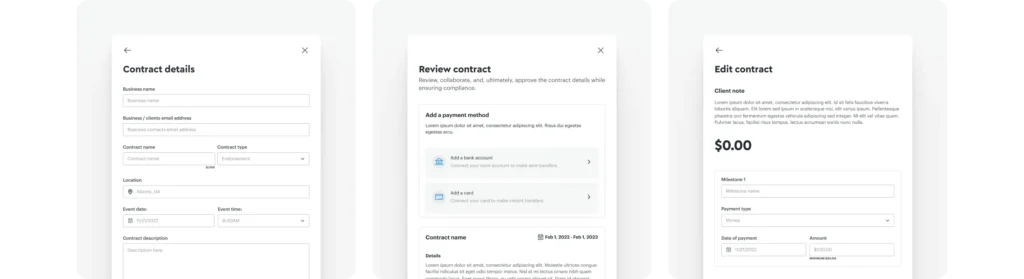
Our most challenging yet essential feature was the built-in contract system, which became the technical backbone for managing deals. This feature enabled brands and athletes to handle legal agreements efficiently while giving university compliance officials and coaches full oversight. By automating contract management, we significantly reduced the manual work for universities and eliminated the need to constantly “chase students down.” Our smart contracts supported two-way signing, contract revisions, and a university approval process, streamlining compliance and ensuring all agreements were properly regulated.
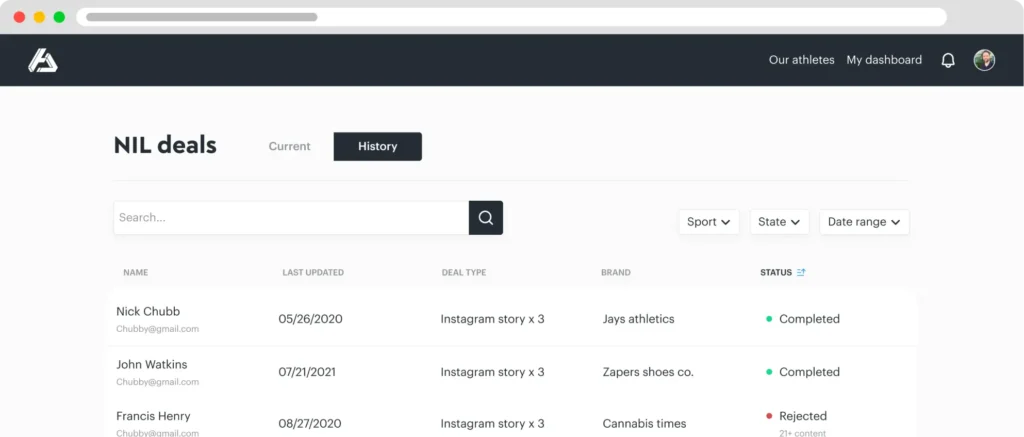
Since universities are our primary customers, we built a unique portal for their compliance departments, putting them at the center of NIL activity. This portal ensures that all contracts, brand postings, and contract data remain transparent as students navigate the marketplace. It also empowers compliance officials to support and advocate for their athletes, providing visibility into typical contracts and negotiation insights. By understanding standard terms, students gain leverage to better advocate for themselves, making the process both educational and compliant.
This platform was built to transform how universities and student athletes navigate the new NIL landscape. By targeting university compliance departments, it offered a unique approach that ensured safety, transparency, and education for everyone involved. With smart contract management and a portal designed to empower both athletes and universities, the product laid a solid, scalable foundation. It entered the market with strong reception from universities, standing out for its thoughtful design and competitive edge.